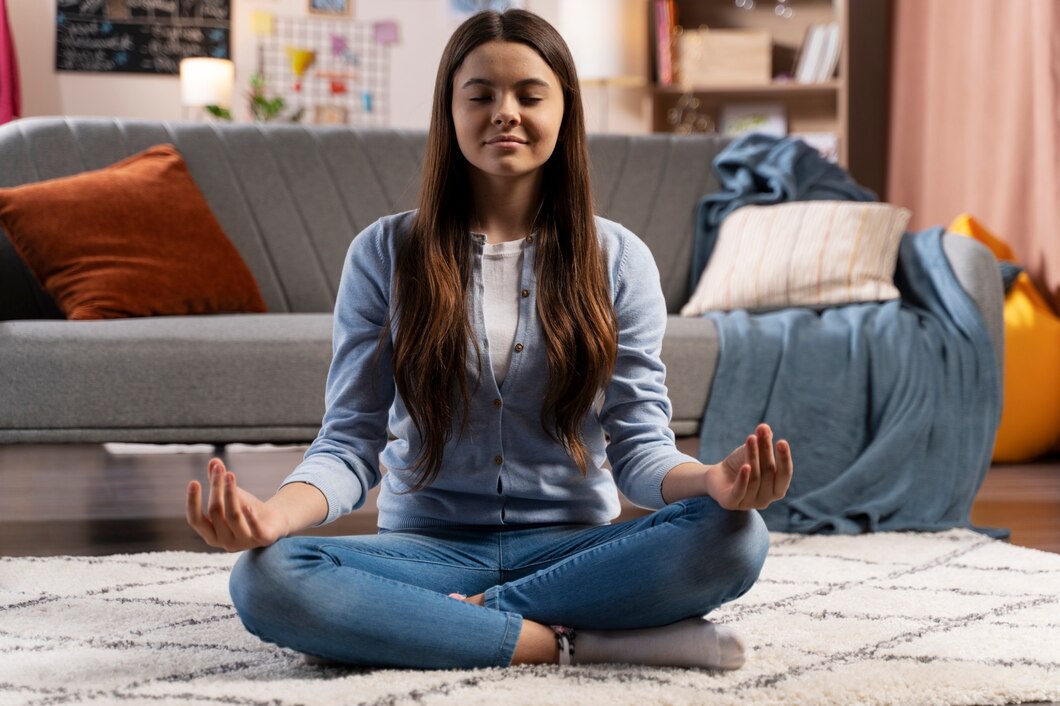
Breathing Techniques

Calming Your Body When Emotions Take Over

When overwhelming emotions show up, your body reacts before your mind can catch up. Your breathing becomes fast and shallow, your chest feels tight, and it can feel like everything is happening at once. This is your body’s alarm system switching on, even if there is no real danger in that moment. 

Deep breathing helps turn that alarm down. By slowing your breath, you send a message to your nervous system that you are safe. As your breathing steadies, your heart rate slows, muscles begin to relax, and intense emotions become easier to manage. 

This is one of the simplest and fastest ways to calm your body when anxiety, anger, or overwhelm feels too much. 

A Simple Deep Breathing Practice You Can Use Anywhere

You do not need a quiet room or special setup. You can do this sitting, standing, or even lying down. 

  • Breathe in slowly through your nose for four counts 
  • Let your belly rise as you inhale 
  • Pause gently for two counts 
  • Breathe out slowly through your mouth for six counts 
  • Repeat this for one to two minutes. 

With each exhale, imagine letting go of a little tension.  This exercise works best when the exhale is longer than the inhale. That longer out breath signals your body to slow down. 

You can use this breathing 

  • When anxiety suddenly spikes 
  • When anger starts building 
  • Before a difficult conversation 
  • When your thoughts are racing 
  • Before sleep or during stressful moments 

Practicing when you feel calm makes it easier to use when emotions are intense. 

A Gentle Reminder

Deep breathing is not about forcing yourself to calm down or making feelings disappear. Even a few slow breaths can help your body step out of survival mode. 

You may still feel upset afterward, and that is okay. What changes first is your body. When your body settles, your mind can follow. Each slow breath is a small act of taking care of yourself.