
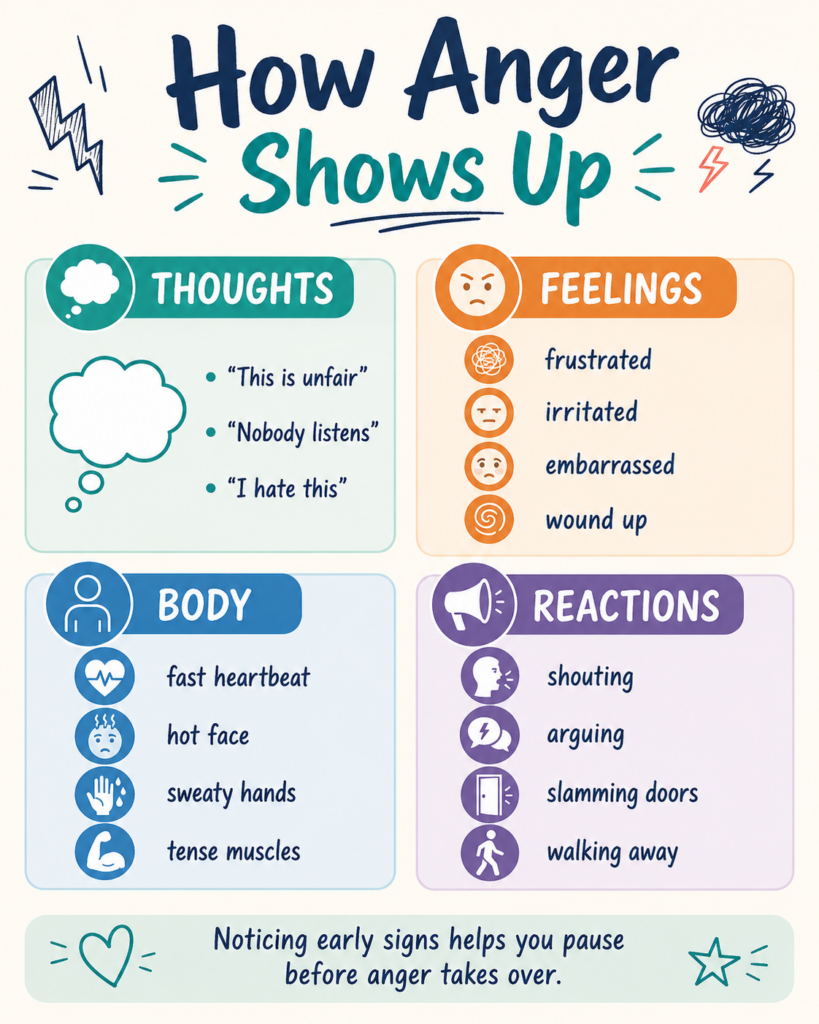
Anger is powerful. When it takes over, it can feel like carrying a fire inside your body. If that fire burns unchecked, it can explode and cause harm. But if you learn how to manage it, the same energy can be released safely and even turned into something positive.
Coping with anger does not mean pretending you are never angry. It means noticing the early signs and deciding what to do next. Sometimes you may need a quick release to stop yourself from exploding. Other times you might need to cool down before responding. And often, it helps to reflect afterwards so you can learn from the situation.
Coping strategies usually fall into three groups:
Hot coping – quick ways to let out energy when anger is at its peak.
Warm coping – calming strategies when you notice anger starting to rise.
Cool coping – reflection and planning for the future when you are already calm.
When anger reaches its peak, it can feel like you are ready to explode. In those moments, it is very difficult to think clearly or have a calm conversation. Your body is full of adrenaline, your muscles are tight, and the urge to react is strong.
Hot coping skills are quick, safe actions that help you release this energy without hurting yourself or others. They don’t solve the problem right away — their job is to stop the fire from spreading.
Examples of hot coping skills include:
The aim of hot coping is simple: release pressure in the moment so anger does not control your actions. Once the intensity goes down, you’ll have space to move on to calmer strategies like warm and cool coping.
Think about the times you’ve felt very angry. What did you do to release that energy? Which of the ideas above might help you next time?
When I feel like I might explode, I can:
☐ ____________________________________________
☐ ____________________________________________
☐ ____________________________________________
One unhealthy reaction I sometimes have is:
A healthier hot coping skill I want to try instead is:
Warm Coping Skills
Hot coping skills are for emergencies when you are on the edge of exploding. But what about the times when you can already feel anger building, even if it hasn’t reached its peak yet? This is where warm coping skills come in.
Warm coping skills are about slowing yourself down before anger gets too strong. They help you stay in control, stretch out your “fuse,” and avoid doing something you’ll regret.
Examples of Warm Coping Skills:
Think about times when you noticed your anger rising but had not yet lost control. What helps you cool down before things escalate?
When I notice my anger rising, I can:
☐ ____________________________________________
☐ ____________________________________________
☐ ____________________________________________
One unhelpful thing I usually do is:
A healthier warm coping skill I want to try instead is:
As your body settles with warm coping, your thoughts become easier to notice and shape. This is the moment to look at the “hot thoughts” that keep anger burning—and practice turning them into “cool thoughts” that help you stay in control.
Changing Hot Thoughts into Cool Thoughts
When anger takes over, your mind often fills with hot thoughts which are automatic, negative, and intense ideas about yourself, other people, or the future. These thoughts exaggerate the situation, assume the worst, and fuel the fire of anger.
Cool thoughts are different. They help you slow down, calm your body, and see things more fairly. Shifting from hot to cool thoughts doesn’t mean pretending everything is fine. It means giving yourself the chance to respond with more control.
Here are some steps to help you change hot thoughts into cool ones:
When anger rises, pause and notice the thought that pops into your mind. Try writing it down. Simply naming the thought (e.g., “I’m thinking everyone is against me”) can help you take a step back instead of getting pulled into it.
Challenge the hot thought by asking yourself:
Example:
After testing your thought, replace it with something calmer and more balanced.
Examples:
Use this page to practice catching and changing your own thoughts.
Step 1. Situation
What happened? ________________________________________
Step 2. My Hot Thought
What popped into my mind? ______________________________
Step 3. Checking My Thought
Step 4. My Cool Thought
A calmer, more balanced way to think is: _________________
Cool Coping Skills
Hot coping is about releasing the fire, warm coping is about cooling down before it explodes, and cool coping happens afterwards when the storm has passed and you feel calmer. This stage is important because it helps you understand what triggered your anger, how you reacted, and what you could do differently next time.
Cool coping is not about fixing everything at once. It’s about reflection, learning, and practicing new habits so you’re better prepared for future situations.
Examples of Cool Coping Skills:
Use this page to reflect on your own anger experiences and plan healthier ways to handle them.
Think back to a recent time you were angry:
Now reflect:
Moving forward:
Join our monthly newsletter to get helpful mental health tips, new tools, upcoming events, and inspiring stories delivered right to your inbox. Everything is designed to support your wellbeing—one gentle step at a time.
Error: Contact form not found.