
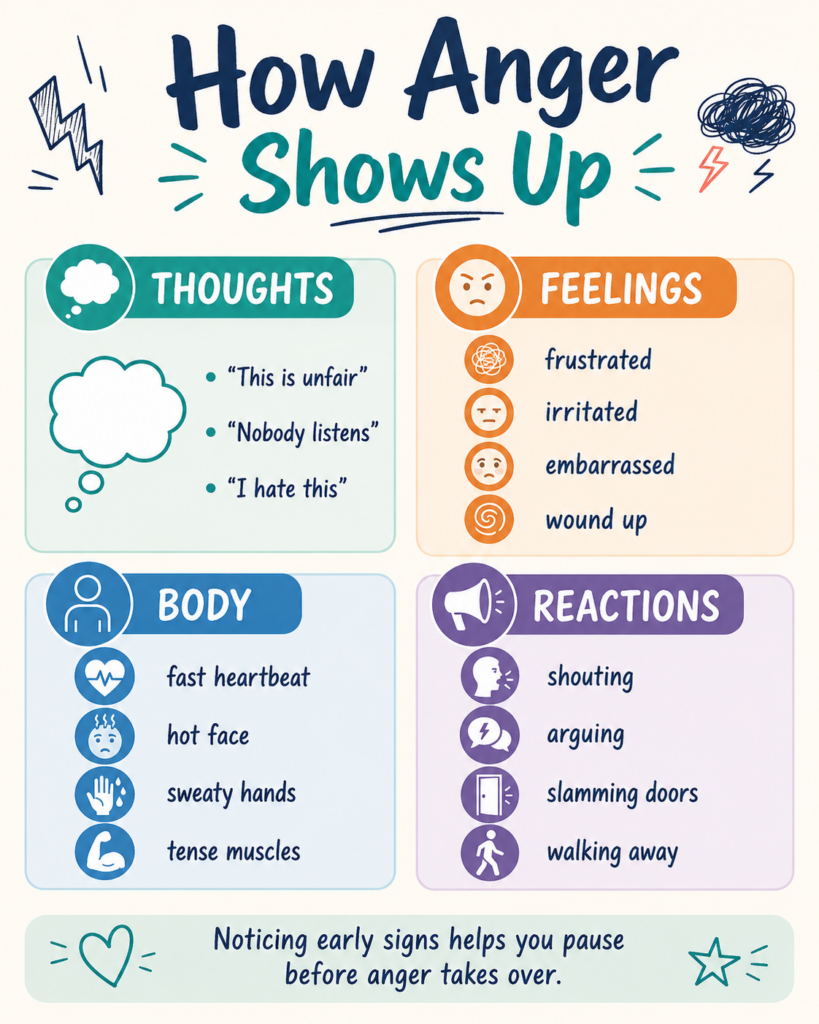
Anger Management

Management of Anger

Anger is powerful. When it takes over, it can feel like carrying a fire inside your body. If that fire burns unchecked, it can explode and cause harm. But if you learn how to manage it, the same energy can be released safely and even turned into something positive. 

Coping with anger does not mean pretending you are never angry. It means noticing the early signs and deciding what to do next. Sometimes you may need a quick release to stop yourself from exploding. Other times you might need to cool down before responding. And often, it helps to reflect afterwards so you can learn from the situation. 

Coping strategies usually fall into three groups: 

Hot coping – quick ways to let out energy when anger is at its peak.

Warm coping – calming strategies when you notice anger starting to rise.

Cool coping – reflection and planning for the future when you are already calm.

Hot Coping Skills

When anger reaches its peak, it can feel like you are ready to explode. In those moments, it is very difficult to think clearly or have a calm conversation. Your body is full of adrenaline, your muscles are tight, and the urge to react is strong. 

Hot coping skills are quick, safe actions that help you release this energy without hurting yourself or others. They don’t solve the problem right away — their job is to stop the fire from spreading. 

Examples of hot coping skills include: 

  • Movement burst: run in place, jump rope, do star jumps, or shake out your arms and legs. 
  • Cool down quickly: splash cold water on your face, hold ice cubes, or step outside into fresh air. 
  • Breathing blast: blow air into a balloon or blow bubbles, imagining you’re pushing the anger out of your body. 
  • Music reset: listen to loud music and sing along, or play an upbeat song and dance until the energy fades. 
  • Creative release: scribble, doodle, or paint with bold strokes to let your feelings out on paper. 
  • Grounding trick: grab something with texture (like clay, a stress ball, or sand) and squeeze or mold it until your body starts to relax. 
  • Quick exercise: do wall push-ups, jog in place, or climb stairs for 2–3 minutes to burn off adrenaline. 
  • Breath with motion: raise your arms high while breathing in deeply, then drop them as you exhale with a loud sigh. 

The aim of hot coping is simple: release pressure in the moment so anger does not control your actions. Once the intensity goes down, you’ll have space to move on to calmer strategies like warm and cool coping. 

My Hot Coping Tools

Think about the times you’ve felt very angry. What did you do to release that energy? Which of the ideas above might help you next time? 

When I feel like I might explode, I can:  
 ____________________________________________ 
 ____________________________________________ 
 ____________________________________________ 

One unhealthy reaction I sometimes have is: 

 A healthier hot coping skill I want to try instead is: 

 Warm Coping Skills 

Hot coping skills are for emergencies when you are on the edge of exploding. But what about the times when you can already feel anger building, even if it hasn’t reached its peak yet? This is where warm coping skills come in. 

Warm coping skills are about slowing yourself down before anger gets too strong. They help you stay in control, stretch out your “fuse,” and avoid doing something you’ll regret. 

Examples of Warm Coping Skills: 

  • Breathing exercises: Slow your breathing down to send a signal to your brain that you are safe. Try 5-finger breathing: stretch out one hand like a star, and with the other hand trace up and down each finger. Breathe in through your nose as you trace up, and breathe out through your mouth as you trace down. Continue until you’ve traced all five fingers. 
  • Progressive muscle relaxation: Anger makes your body tense without you even noticing. Pick one body part at a time (like fists, shoulders, or legs). Tighten the muscles as much as you can for 5–10 seconds, then let them go completely. Repeat until your whole body feels looser. 
  • Taking a break: Sometimes the best choice is to remove yourself from the situation. Go for a short walk, step outside for fresh air, or simply move to a quieter space. Giving yourself distance prevents an explosion and gives you time to cool down. 
  • Distraction activities: Shift your focus away from what is making you angry. Play a game, listen to music, read, doodle, or watch something funny. Even a few minutes of distraction can lower the intensity of anger and clear your head. 
  • Positive self-talk: The way you speak to yourself affects how you feel. Instead of repeating angry thoughts like “This is so unfair” or “I can’t take this,” try phrases like “I can handle this,” “This feeling will pass,” or “I don’t have to react right now.” 
  • Visualization: Close your eyes and picture a calm, safe place. It could be a beach, a forest, or even your own room. Imagine the sights, sounds, and feelings of being there until your body starts to relax. 

My Warm Coping Tools

Think about times when you noticed your anger rising but had not yet lost control. What helps you cool down before things escalate? 

When I notice my anger rising, I can:  
 ____________________________________________ 
 ____________________________________________ 
 ____________________________________________ 

One unhelpful thing I usually do is: 

 A healthier warm coping skill I want to try instead is: 

 As your body settles with warm coping, your thoughts become easier to notice and shape. This is the moment to look at the “hot thoughts” that keep anger burning—and practice turning them into “cool thoughts” that help you stay in control. 

Changing Hot Thoughts into Cool Thoughts 

When anger takes over, your mind often fills with hot thoughts which are automatic, negative, and intense ideas about yourself, other people, or the future. These thoughts exaggerate the situation, assume the worst, and fuel the fire of anger. 

Cool thoughts are different. They help you slow down, calm your body, and see things more fairly. Shifting from hot to cool thoughts doesn’t mean pretending everything is fine. It means giving yourself the chance to respond with more control. 

Here are some steps to help you change hot thoughts into cool ones: 

  1. Catch the Hot Thought

When anger rises, pause and notice the thought that pops into your mind. Try writing it down. Simply naming the thought (e.g., “I’m thinking everyone is against me”) can help you take a step back instead of getting pulled into it. 

  1. Test the Thought

Challenge the hot thought by asking yourself: 

  • What evidence do I have that this thought is 100% true? 
  • What evidence shows it might not be completely true? 
  • Am I confusing assumptions with facts? 
  • What would I say to a friend if they had this same thought? 
  • Could there be another explanation for what happened? 

Example: 

  • Hot Thought: “My teacher embarrassed me on purpose.” 
  • Evidence For: She corrected me in front of the class. 
  • Evidence Against: She corrects other students too; she often wants us to learn from mistakes. 
  • Thought or Fact? It’s my thought — I can’t know her intention. 
  • What I’d tell a friend: “She was just teaching, not attacking you.” 
  • Cool Thought: “It wasn’t personal. She wanted me to understand the right answer.” 
  1. Replace with a Cool Thought

After testing your thought, replace it with something calmer and more balanced. 

Examples: 

  • Hot: “This is so unfair, I can’t stand it!” 
    → Cool: “I don’t like this, but I can handle it without losing control.” 
  • Hot: “He always does this just to annoy me.” 
    → Cool: “Maybe he wasn’t thinking. I can explain calmly how it bothers me.” 
  • Hot: “I failed that test. I’ll never be good at this.” 
    → Cool: “I didn’t do well this time, but I can learn from it and improve.” 

Hot to Cool Thought Practice

Use this page to practice catching and changing your own thoughts. 

Step 1. Situation 
What happened? ________________________________________ 

Step 2. My Hot Thought 
What popped into my mind? ______________________________ 

Step 3. Checking My Thought 

  • Evidence For: ________________________________________ 
  • Evidence Against: _____________________________________ 
  • Thought or Fact? ______________________________________ 
  • What I’d tell a friend: _________________________________ 

Step 4. My Cool Thought 
A calmer, more balanced way to think is: _________________ 

Cool Coping Skills 

Hot coping is about releasing the fire, warm coping is about cooling down before it explodes, and cool coping happens afterwards when the storm has passed and you feel calmer. This stage is important because it helps you understand what triggered your anger, how you reacted, and what you could do differently next time. 

Cool coping is not about fixing everything at once. It’s about reflection, learning, and practicing new habits so you’re better prepared for future situations. 

Examples of Cool Coping Skills: 

  • Keep an anger diary: Write down what happened, what triggered you, what you thought and felt, and how you reacted. Over time, this helps you spot patterns and understand your personal triggers.  
  • Review your coping strategies: Ask yourself, “Did my hot or warm coping skills work this time? What could I try differently?” Keeping track of what helps makes it easier to repeat. 
  • Practice assertiveness: Anger often comes from feeling unheard. Practice saying what you need calmly and clearly using “I-statements.” For example, instead of shouting “You never listen!” say, “I feel upset when I’m not listened to.” 
  • Plan ahead: If you know a situation will test your patience like an upcoming test, a tough conversation, or being around someone who annoys you, make a plan for how you’ll cope. Decide which hot or warm skills you’ll use if anger starts rising. 
  • Relax regularly: Build calming activities into your daily routine, not just when you’re upset. Exercise, hobbies, music, meditation, or spending time with friends can keep your stress levels lower, making anger easier to manage. 
  • Talk it out: Share your feelings with someone you trust, a parent, a friend, or a mentor. Talking after the storm helps you release leftover tension and gain perspective. 

My Cool Coping Plan

Use this page to reflect on your own anger experiences and plan healthier ways to handle them. 

Think back to a recent time you were angry: 

  • What triggered me? ____________________________________ 
  • What thoughts went through my mind? ____________________ 
  • What feelings did I notice? ______________________________ 
  • How did my body react? _________________________________ 
  • What did I do? _________________________________________ 

Now reflect: 

  • Did this way of coping help or make things worse? ____________ 
  • Which coping skill worked best? ___________________________ 
  • What will I do differently next time? ________________________ 

Moving forward: 

  • One coping skill I want to practice more is: _________________ 
  • A situation I know will test my patience is: _________________ 
  • My plan for handling it is: ________________________________